When is a Liver Transplant Needed?
A liver transplant is a life-saving procedure for patients with irreversible acute or chronic liver failure.
Why Choose LWE for Liver Transplants?
India is globally renowned for pioneering Living Donor Liver Transplants (LDLT). We connect you with centers of excellence boasting a 90-95% success rate.
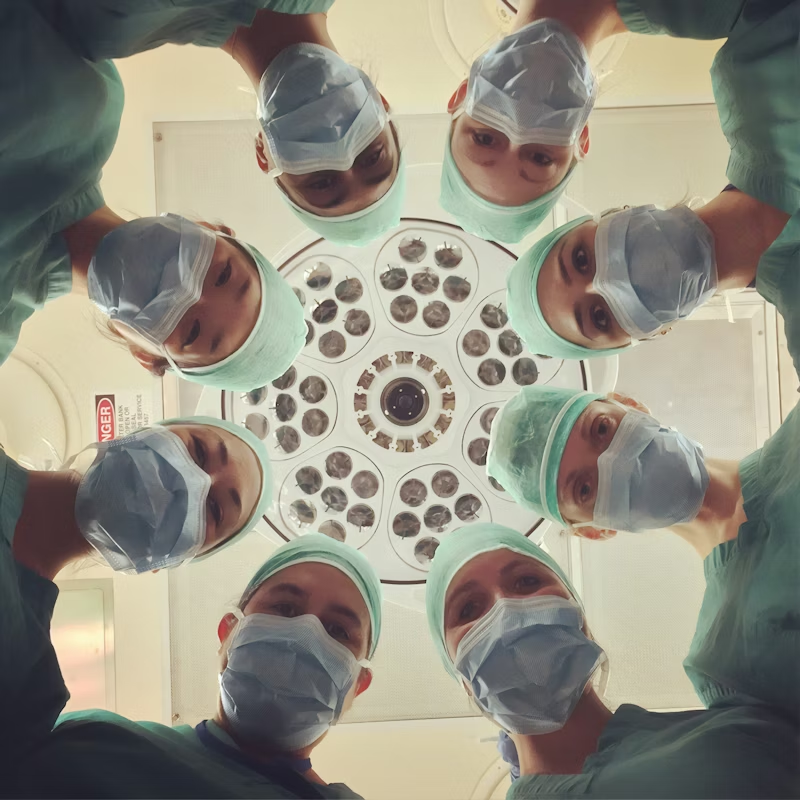
Top Hepatobiliary Surgeons
Surgeries led by highly decorated doctors who have performed over 1,500+ successful liver transplants.
Pediatric Liver Expertise
Specialized multidisciplinary teams dedicated specifically to treating infants and children with liver disease.
Dedicated Liver ICUs
State-of-the-art Hepatic ICUs with advanced hemodynamic monitoring and strict infection control protocols.
Seamless Legal Guidance
End-to-end support for foreign nationals to secure rapid approval from the Transplant Authorization Committee.
Comprehensive Hepatology Hub
Discover the different modalities of liver transplantation and the advanced technologies we utilize.
Types of Liver Transplants
Due to the severe shortage of deceased donors, Living Donor Liver Transplants are the most viable and successful option for international patients in India.
Advanced Surgical Technology
3D Liver Volumetry
Pre-surgical 3D mapping of the donor's liver ensures exactly the right volume is removed, prioritizing donor safety above all else.
CUSA Technology
Cavitron Ultrasonic Surgical Aspirator allows surgeons to cut liver tissue while preserving blood vessels, ensuring a nearly bloodless surgery.
Intraoperative Ultrasound
Real-time imaging during surgery ensures perfect reconnection of the bile ducts and hepatic arteries, minimizing complications.
Liver Regeneration & Recovery
The human liver is the only internal organ capable of natural regeneration. This makes living donation incredibly safe.
- For the Donor: The remaining liver regenerates to nearly 100% of its original size and function within 8 to 12 weeks post-surgery.
- For the Recipient: The transplanted partial liver also grows rapidly to meet the body's metabolic demands. Lifelong immunosuppressants will be required to prevent rejection.
- Isolation & Diet: Strict infection control and a tailored, high-protein diet are crucial in the first 3 months to support rapid tissue regeneration.
The Transplant Journey
A structured, step-by-step process ensuring legal compliance and medical safety for foreign nationals.
Medical Evaluation
Share Liver Function Tests (LFT), Triphasic CT scans, and donor details for a free clinical review by our Hepatology board.
Arrival & Workup
Travel to India. Both patient and donor undergo 5-7 days of extensive physical, cardiac, and radiological matching tests.
Legal Clearance
Submit relationship proofs (DNA, Embassy NOC) to the Government Transplant Committee for authorization.
Surgery & Recovery
The dual surgeries take place. Donors are discharged in ~7 days, while recipients stay in the hospital for 14-21 days.
Frequently Asked Questions
Liver transplantation involves strict legal guidelines and complex medical science. Here is what you need to know.
Ask a Specific QuestionEvery Day Counts. Let Us Help You Today.
Share your Liver Function Tests (LFT), recent CT/MRI Scans, and proposed donor details for a comprehensive, free medical evaluation.