Conditions Treated by BMT
Stem cell transplantation is a potentially curative treatment for severe blood cancers and genetic blood disorders.
Why Choose LWE for Stem Cell Transplants?
Bone Marrow Transplants require an ultra-sterile environment and extreme precision. Our partner hospitals house India's largest and most successful dedicated BMT units.
Renowned Hematologists
Transplants performed by US/UK trained specialists who have successfully completed over 2,000+ BMTs.
HEPA-Filtered BMT Suites
Ultra-clean, positive-pressure isolation rooms to protect patients from infections when their immunity is near zero.
Donor Registry Access
If you lack a family donor, we assist in finding matched unrelated donors via global registries like DATRI and DKMS.
Pediatric BMT Expertise
Specialized units designed specifically for children battling Thalassemia and genetic immune disorders.
Comprehensive BMT Program
Understand the types of transplants we perform, the biological process, and the advanced technology used.
Types of Bone Marrow Transplants
The type of transplant required depends strictly on the underlying disease and the availability of a matched donor.
How the Transplant Works
A Bone Marrow Transplant is not a surgical operation; the infusion process is similar to a blood transfusion. The complexity lies in the preparation and recovery.
1. Harvesting
Stem cells are collected from the donor's bloodstream via Apheresis (most common) or directly from the hip bone.
2. Conditioning
The patient receives high-dose chemotherapy/radiation to destroy diseased bone marrow and make room for new cells.
3. Engraftment
The new cells are infused into the blood, migrate to the bone marrow, and begin producing healthy new blood cells within 2-4 weeks.
Advanced Cellular Technologies
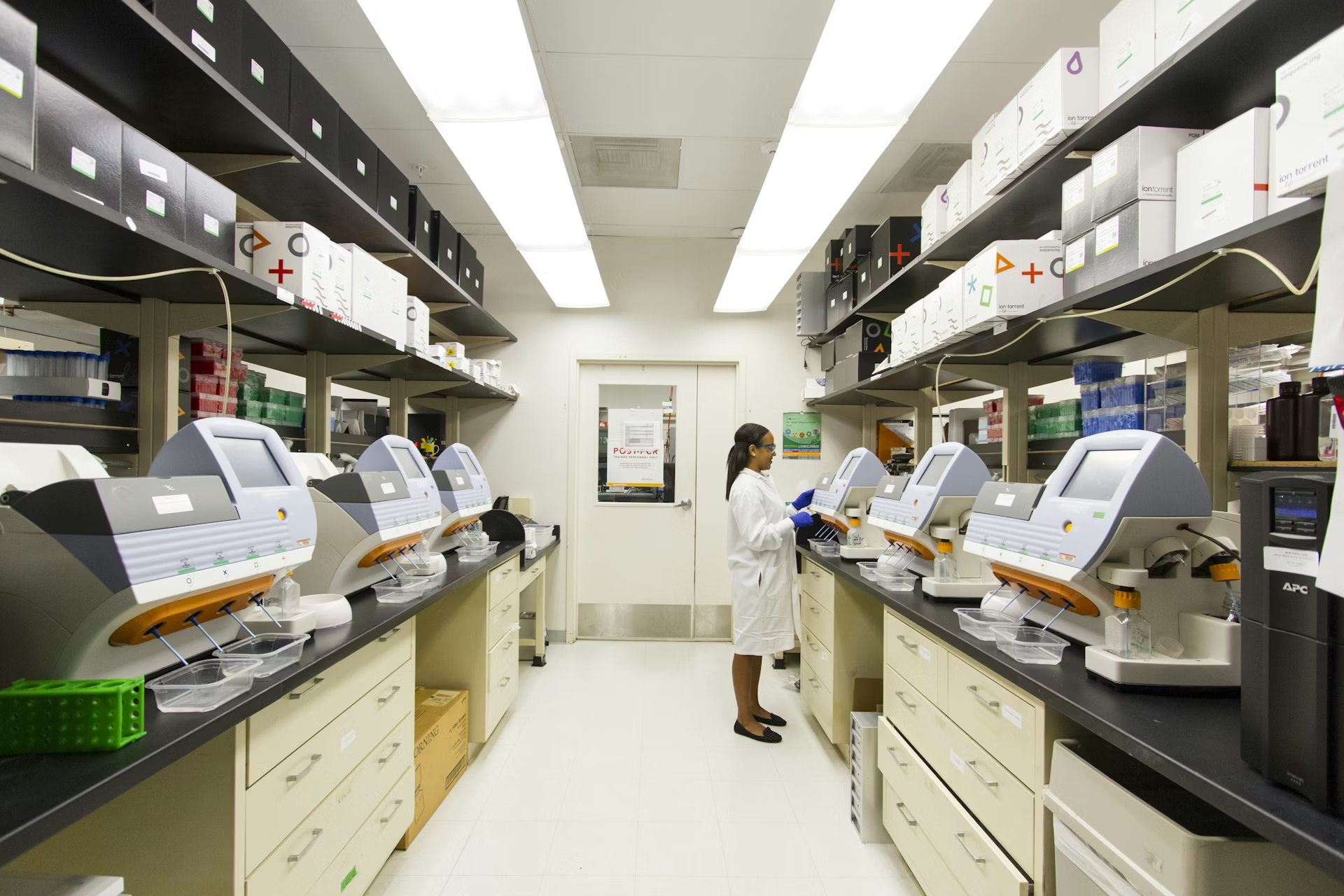
- Flow Cytometry Labs: Ultra-precise laser technology used to count and verify the exact number of viable CD34+ stem cells before infusion.
- Cryopreservation: State-of-the-art liquid nitrogen freezers that safely store harvested autologous stem cells at -196°C for years if necessary.
- Blood Irradiators: Specialized equipment to irradiate all blood products given to the patient, preventing Transfusion-Associated Graft-versus-Host Disease (TA-GVHD).
The Journey to Remission
A BMT requires commitment. Here is the step-by-step roadmap for our international patients.
Medical Evaluation
Share Complete Blood Count (CBC), Bone Marrow Biopsy, and HLA-Typing reports for our hematologists to review.
Donor Selection
We determine if you need an Autologous or Allogeneic transplant. If Allogeneic, we test siblings for an HLA match.
Treatment & Isolation
Travel to India. After conditioning and infusion, you will stay in a sterile HEPA-filtered room for 3-4 weeks until engraftment.
Outpatient Monitoring
Once discharged, you must stay near the hospital for 1-2 months for regular blood tests to monitor Graft-vs-Host Disease (GVHD).
Frequently Asked Questions
Bone Marrow Transplantation is a complex journey. Here are some of the most critical questions asked by our patients.
Ask a Specific QuestionTake the First Step Toward a Cure.
Share your Complete Blood Count (CBC), Bone Marrow Biopsy, and HLA Typing reports for a free evaluation by our Hematology Board.